

Best Raised Garden Beds (Cedar)
Western red cedar is the gold standard for raised vegetable beds — naturally rot-resistant without treatment, light to handle, and beautiful as it weathers to silver. A cedar bed will give you 10–15 years of vegetabl
If you have been following the progress of my husband’s strip canoe, I’m happy to report that this is our 2nd to last post! The seats are being constructed and after they are installed, the canoe will be complete! I can’t wait to show you the finished canoe!
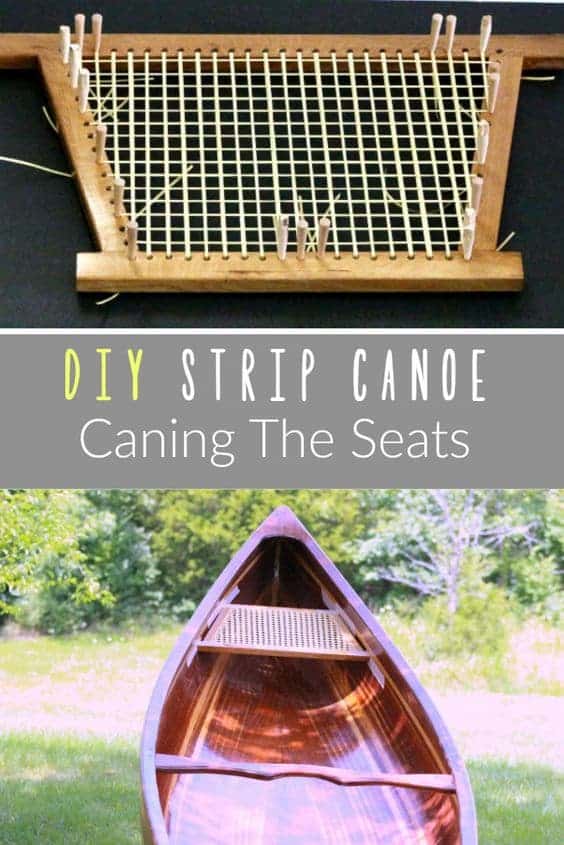
Following the recommendation in the Building A Strip Canoe book, Mr. Hobby is constructing the seats by using plastic cane to weave the seat. Plastic cane, as opposed to a natural cane, is used because it is more durable for outdoor applications.
After two frames were built, holes were drilled for the weaving. Wooden pegs help to hold the cane tightly in place during the weaving.
Cane is first weaved from top to bottom, and then side to side, and eventually vertically.
Mr. Hobby reports that weaving the cane is a tedious process, but the end result should be a strong seat that will withstand the elements, especially water.
I am trying my hand at this cane weaving and I’m working on the 2nd seat. I think I should have read the instructions in the book before I started . . . I’m almost embarrassed to say that I spent quite a bit of time pulling out rows because I made a mistake.
Mr. Hobby also made and installed the yoke. The yoke will help Mr. Hobby carry the canoe on his own.
The gunnels turned out great!
The seat pictured above still needs to be attached, it is just set in place right now. A 2nd seat will be added to the front of the canoe.
We are getting excited for the maiden voyage!
If you enjoyed this project, we’d love if you’d pin it to share! Thank you!

Western red cedar is the gold standard for raised vegetable beds — naturally rot-resistant without treatment, light to handle, and beautiful as it weathers to silver. A cedar bed will give you 10–15 years of vegetabl

Rain barrels — or water butts if you are British — capture roof runoff in a tank you can dip a watering can into. A 200 L barrel fills in 20 minutes of moderate rain off a small carport, and saves you a few dollars a

A good hose nozzle is the difference between watering plants and washing them away. Adjustable patterns matter, but so does the trigger — a stiff trigger that hurts your hand after ten minutes is the kind of small anno

Oscillating sprinklers are the right tool for a rectangular lawn. They lay water down evenly, can be width-adjusted to avoid the path, and (unlike rotary sprinklers) don’t shoot a thin jet across the next-door neighbour’

Indoor watering is a different problem from outdoor watering. You need a long, narrow spout that reaches between leaves without dribbling on the floor, a balanced shape so a one-litre fill doesn’t fight you, and a finish

Soaker hoses are the old reliable: a length of porous rubber or punched poly tubing that weeps water along its full length when the tap is on. Less precise than drip, less expensive than smart irrigation, and entirely go