
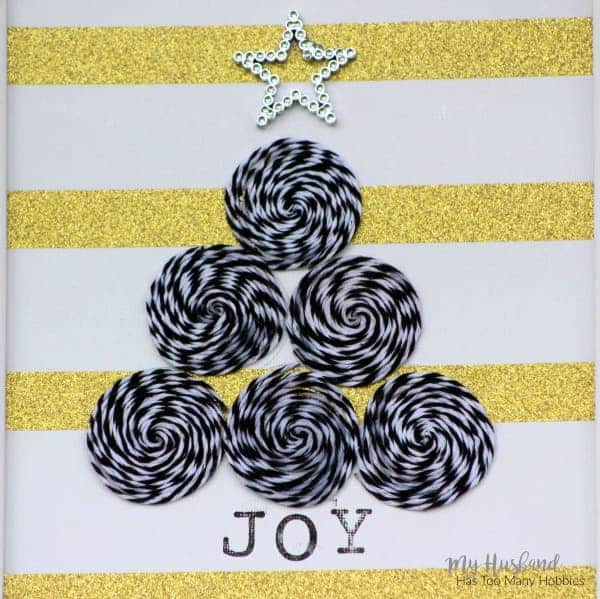
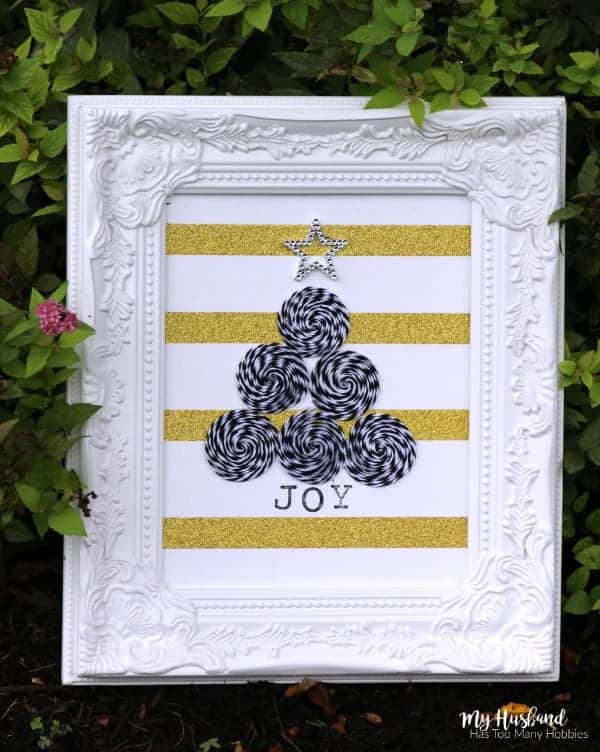
I’ve teamed up with some awesome bloggy friends to bring you Christmas in July. We’re sharing a non-traditional Black, White & Gold Christmas Tree project.
Every July we are sharing and linking up Christmas themed projects!
I hope you’ll check in each week for some fabulous Christmas ideas and inspiration!
Black, White & Gold Christmas Tree Wall Art
This black and white Christmas tree wall art is dressed up with glitter gold stripes. Can’t have enough glitter for Christmas, right? This project easily comes together with just a few supplies.
8×10 white canvas
pencil
Glitter Gold duct tape
Black/White bakers twine
Glue
paint brush
Star
Scissors
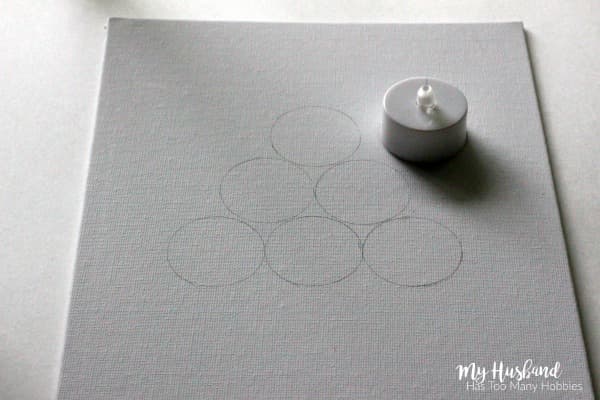
I started with an 8×10 white canvas. I drew circles on the canvas with a pencil. I used a tea light as a pattern because it was just the right size.
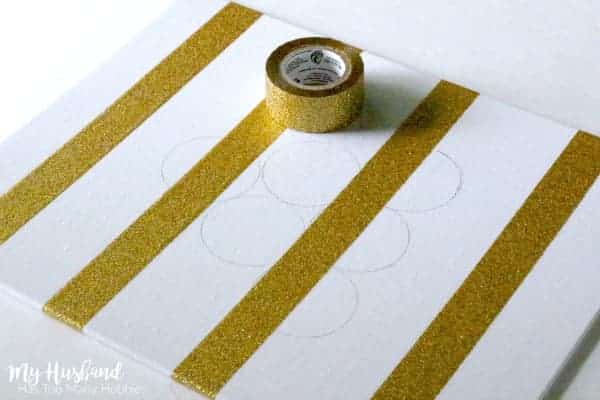
Next, I added strips of gold glitter duct tape to the canvas.
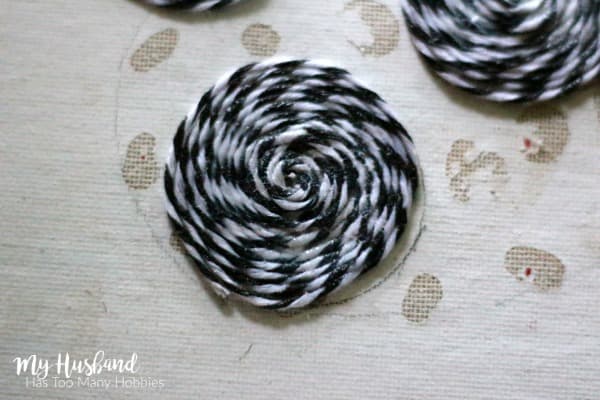
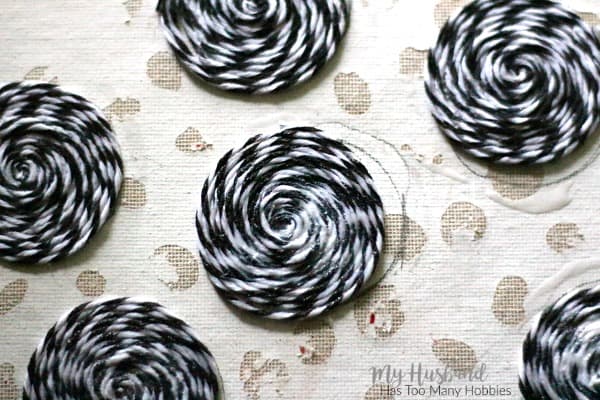
I used black and white bakers twine to fill the circles. To do this, I first drew circles on an old canvas – you could use cardboard or even a sheet of wax paper for this. I rolled the bakers twine in a circle large enough to fill my patterned circles.
To hold the shape, I coated one side of each of these wrapped twine circles with a thick layer of glue using a paint brush. I set it aside for a few hours to dry. The glue will help hold these together as they are glued to the finish canvas.
After they were dry, I attached the baker’s twine swirls by putting a few drops of glue on the side that I had earlier coated with glue and then attached them to the finish canvas.
I wasn’t sure what I wanted to do for the trunk of the tree . . . I hadn’t gotten that far since I was making this up as I went along. When I was faced with the issue, I tried several things before settling on stamping the word Joy under the tree.
The star actually came from the Dollar Store. A couple years ago I picked up a package of princess wands in the party section. I used a couple of them in my plastic spoon Christmas tree cones, and I had several left over.
I cut the wand handle off with a pair of scissors and used the star tip for this project.
This project was so easy to do. Even if you prefer traditional colors or pastels, you can easily make this with any colors you want.
Insert into frame of your choice.
This picture is going to look wonderful sitting on my piano during the Holidays!
Thank you!