


Best Mycorrhizal Inoculants
Mycorrhizal fungi form symbiotic networks with plant roots — the plant feeds the fungus, the fungus extends the plant’s effective root system tenfold. Inoculants introduce these fungi to soils where they’re absent (mos

Today we are participating in a fun Upcycle Challenge with a few of our blogging friends. The challenge was to create something using clothing material – old shirts, pants, sweaters, socks, or anything else made from material. We used worn wool socks to create this fabulous Rustic Christmas Garland. I know it is a little early to be sharing Christmas projects, but for the DIY’er, it’s never too early!.
Supplies Used:
Mr. Hobby handed me a pile of wool socks with holes in the heels and asked me if I knew how to darn socks. I remember that my Mom used to darn socks a long time ago, but this was not a skill I had acquired. They sat in a pile for a long while, and eventually Mr. Hobby purchased new socks. I knew the socks would be perfect for what I had in mind for this upcycle challenge project.
Table of Contents
ToggleCut a simple pattern out of paper. To tell you the truth, I wasn’t very exact with it, and trimmed it until it covered a 4th of the small Styrofoam ball.
Socks are great for this project because they have elastic in them, not to mention that there were several different neutral colors in each sock.
Four pieces of wool were cut for each Styrofoam ball.
Next, I used hot melt glue to attach the wool pieces to the Styrofoam balls. I put the glue directly on the wool piece and then attached it to the ball shape which greatly minimized the Styrofoam from melting too much.
The elastic in the wool helped to stretch the wool when needed to be able to cover the Styrofoam easily.
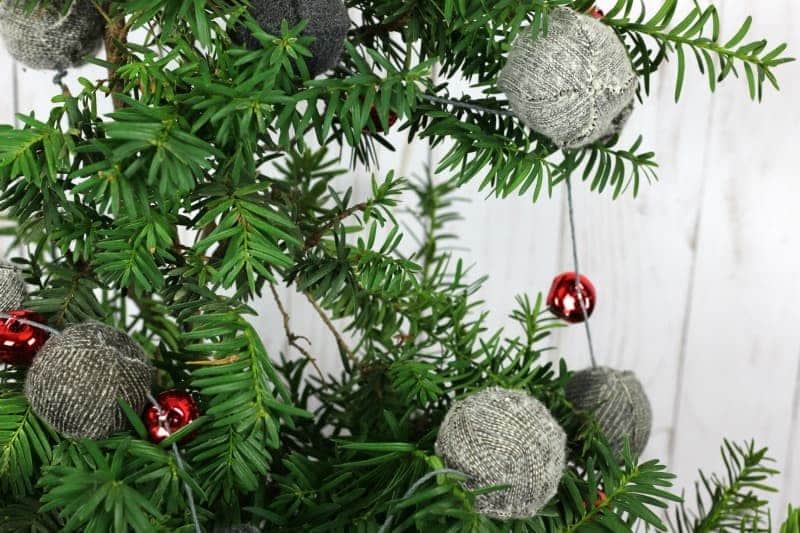
Using a tapestry needle, I strung the wool balls onto a length of gray Hemp Cord, alternating red bells to add just a touch of color to my garland. I think silver bells would have been pretty too. You could just add an individual string to each wool ball and make ornaments out of them instead of a garland. Up to you.
I wanted to show how the garland would look on a Christmas tree. This was more of a challenge than making the garland because I didn’t have a Christmas tree. So, I made my own. I clipped a few branches from my bushes. They needed a little trimming anyway and made my own sorry-looking tree.
Yes, my hastily put together Christmas tree is misshapen & small, and the garland doesn’t hang well because the branches are not very strong. But you get the idea, right?
This garland it going to look fabulous on my real Christmas Tree this year. Can’t wait! I’ve never done a rustic Christmas tree before and I’m looking forwarding to it.
Thank you for sharing!

Mycorrhizal fungi form symbiotic networks with plant roots — the plant feeds the fungus, the fungus extends the plant’s effective root system tenfold. Inoculants introduce these fungi to soils where they’re absent (mos


Liquid seaweed extract is the magic-bullet supplement of organic vegetable growing. It contains over 70 trace minerals, plant growth hormones (cytokinin, auxin), and improves stress resistance — making plants more drou

Bone meal — ground animal bone — is the traditional slow-release phosphorus fertiliser for vegetables, fruit trees, and bulb plantings. Phosphorus drives root development and flowering, so bone meal at planting time

Worm castings — the digested output of composting worms — are the closest thing to perfect plant food in nature. They’re mild, slow-release, packed with beneficial microbes, and impossible to over-apply. A handful ar

Container plants live or die by the potting mix. Ordinary topsoil compacts in a pot and drowns roots; the right potting mix has structure (perlite, peat or coco), nutrition (compost, slow-release fertiliser), and biology

Making your own compost is best, but if you’re just starting a garden — or topping up after a big planting — bagged compost is the practical answer. The right bagged product is fully composted (not raw manure), scree