

This handsome zen garden demonstrates how you can view it from four sides and have a completely different interpretation of what it represents with each passing angle. One step forward and you might see islands in the ocean, two steps back around the other direction and you may see something entirely different. Other zen garden styles force you to view them from only one angle in an enclosed setting. Each experience is unique and yet the intrinsic reverence for nature and simplicity are both honored by differing views.
This vignette at the Franklin Conservatory was a wonderful example of this same idea for allowing us to experience the garden from many vantage points. The designers used the angles of the walking paths along with the dips and turn to make the most of each particular view. It made a huge difference in how you see the complexity and layers of this gorgeous foliage. That’s saying a lot for this photographer who is VERY close to the ground.
Layers and layers of luscious grasses, conifers, shrubs, and specimen trees came together here with subtle color echoes, textural crescendo, and ethereal color tones that force you to stop and take it all in slowly. These are very large-scale examples obviously, but what can we learn in our own landscapes about how we can make the most of each viewpoint?
This large garden is a sunny jewel-toned mix of color, texture, and layers. While the voluptuous lemon-lime-toned privet adds ruffles in the foreground, the ribbon of Russian Sage creates an amethyst river that is a complementary color. The red-ombre effect from hard-pruned smokebushes is a delightful larger leaf that brings a marvelous garnet color addition. The point of view, in this case, was broad and deep. There is a hedge in the foreground that hides colorful foliage and bloom surprise.
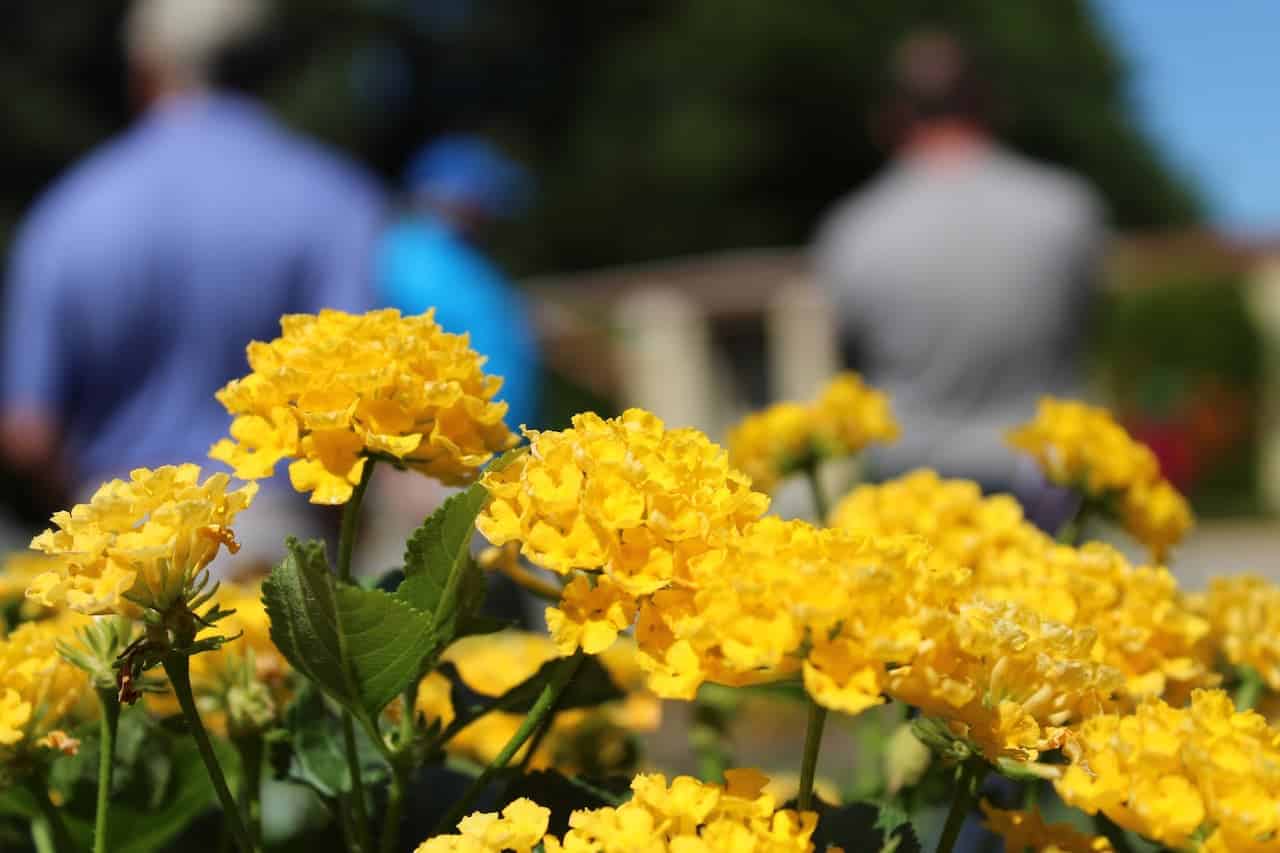
Blues and golds or purple and yellow are such happy friends on the color wheel. When you look closely at the entirety of the design from afar, you can’t see this perspective. But, it sure was worth coming up for the close-up! The entire river of Russian sage was underplanted with ‘Samantha’ Lantana, a fantastic choice with that incredibly jubilant foliage. It was like stage lighting for the sage to glow against.